Who a Voice Over Career Is Right For
You have a voice that connects. Not just sounds good. Connects. People actually listen when you talk.
You are disciplined enough to work alone. The home studio life is quiet. A lot quieter than most people expect. You need to generate your own structure and your own momentum.
You genuinely like the craft. Not the idea of the craft. The actual hours in front of a microphone, reading the same 30 seconds twelve times to find the take that is right rather than just usable.
You can handle the business side without it taking over. Invoicing, marketing, follow-up, auditions, client management. It is not glamorous. It has to get done.
The actual answer
Voice over is a good career. Not easy. Not passive. Not guaranteed. But good, in the way that any work is good when it is something you would do even if the pay were lower.
I still get up at 5:45am. A voice over coach once told a room full of students that the VO life meant rolling out of bed at 9am and easing into the day. She was not wrong, exactly. But she skipped the part where you spend years getting there.
Worth it? For me, yes. For everyone who signs up? No. The honest answer is that you will find out, and the finding out takes time.
Industry Resources
The Bureau of Labor Statistics actors outlook covers employment trends and median pay for voice actors. The GVAA Rate Guide is the industry’s most referenced pay benchmark. Edge Studio offers resources for building a sustainable voice over career.
The things that actually predict success
Talent helps. Having a voice people want to listen to helps. Neither one is the primary predictor.
What predicts success in voice over is the same thing that predicts success in any freelance creative work: consistency, patience, and the ability to treat rejection as data rather than verdict.
You will audition for things you do not book. You will do jobs that go nowhere. You will have clients who disappear after one project. None of that is a sign you are in the wrong career. It is just the career.
The people who build sustainable voice over careers treat it like a business from day one. They market themselves before they feel ready. They invest in equipment before it feels justified. They say yes to the project that pays less than they would like because it builds the relationship.
Who a Voice Over Career Is Right For
You have a voice that connects. Not just sounds good. Connects. People actually listen when you talk.
You are disciplined enough to work alone. The home studio life is quiet. A lot quieter than most people expect. You need to generate your own structure and your own momentum.
You genuinely like the craft. Not the idea of the craft. The actual hours in front of a microphone, reading the same 30 seconds twelve times to find the take that is right rather than just usable.
You can handle the business side without it taking over. Invoicing, marketing, follow-up, auditions, client management. It is not glamorous. It has to get done.
The actual answer
Voice over is a good career. Not easy. Not passive. Not guaranteed. But good, in the way that any work is good when it is something you would do even if the pay were lower.
I still get up at 5:45am. A voice over coach once told a room full of students that the VO life meant rolling out of bed at 9am and easing into the day. She was not wrong, exactly. But she skipped the part where you spend years getting there.
Worth it? For me, yes. For everyone who signs up? No. The honest answer is that you will find out, and the finding out takes time.
Industry Resources
The Bureau of Labor Statistics actors outlook covers employment trends and median pay for voice actors. The GVAA Rate Guide is the industry’s most referenced pay benchmark. Edge Studio offers resources for building a sustainable voice over career.
The part the coaches do not lead with
Voice over coaching is a business. There are good coaches and there are people selling the dream. The dream version goes like this: get training, build a demo, set up a home studio, book jobs. Repeat. Passive income. Work from home. Roll out of bed at 9am.
The reality version goes like this: spend money on training, spend money on a demo, spend money on a home studio, market yourself constantly, get rejected constantly, book something, get better, repeat. For years. Before it starts to compound.
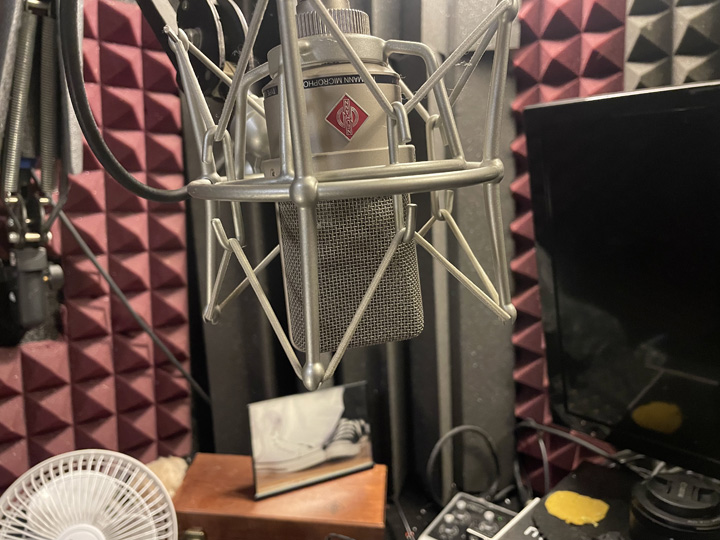
I built my studio piece by piece. The Whisper Room came from Craigslist, thousands below retail. Drove a U-Haul to Nashville with a buddy to pick it up. The Neumann TLM 103 came later. So did the processors, the routing, all of it. Nothing came fast. Nothing came cheap. And it was worth it, because I was already committed to this being the work, not a side project.
The things that actually predict success
Talent helps. Having a voice people want to listen to helps. Neither one is the primary predictor.
What predicts success in voice over is the same thing that predicts success in any freelance creative work: consistency, patience, and the ability to treat rejection as data rather than verdict.
You will audition for things you do not book. You will do jobs that go nowhere. You will have clients who disappear after one project. None of that is a sign you are in the wrong career. It is just the career.
The people who build sustainable voice over careers treat it like a business from day one. They market themselves before they feel ready. They invest in equipment before it feels justified. They say yes to the project that pays less than they would like because it builds the relationship.
Who a Voice Over Career Is Right For
You have a voice that connects. Not just sounds good. Connects. People actually listen when you talk.
You are disciplined enough to work alone. The home studio life is quiet. A lot quieter than most people expect. You need to generate your own structure and your own momentum.
You genuinely like the craft. Not the idea of the craft. The actual hours in front of a microphone, reading the same 30 seconds twelve times to find the take that is right rather than just usable.
You can handle the business side without it taking over. Invoicing, marketing, follow-up, auditions, client management. It is not glamorous. It has to get done.
The actual answer
Voice over is a good career. Not easy. Not passive. Not guaranteed. But good, in the way that any work is good when it is something you would do even if the pay were lower.
I still get up at 5:45am. A voice over coach once told a room full of students that the VO life meant rolling out of bed at 9am and easing into the day. She was not wrong, exactly. But she skipped the part where you spend years getting there.
Worth it? For me, yes. For everyone who signs up? No. The honest answer is that you will find out, and the finding out takes time.
Industry Resources
The Bureau of Labor Statistics actors outlook covers employment trends and median pay for voice actors. The GVAA Rate Guide is the industry’s most referenced pay benchmark. Edge Studio offers resources for building a sustainable voice over career.