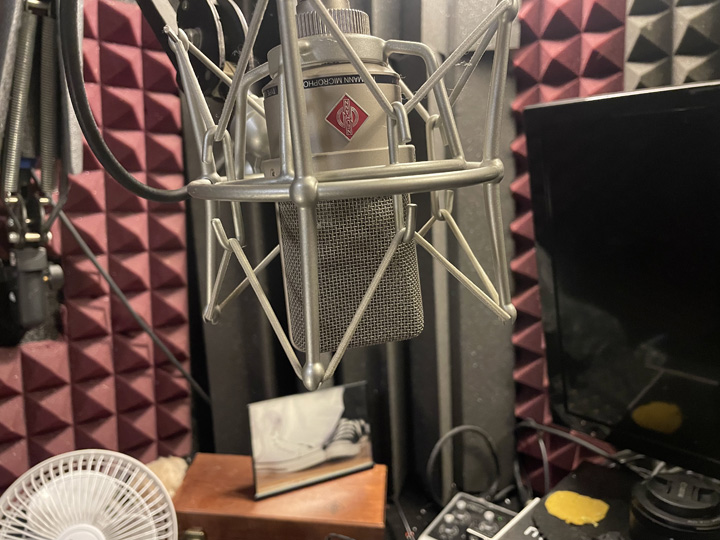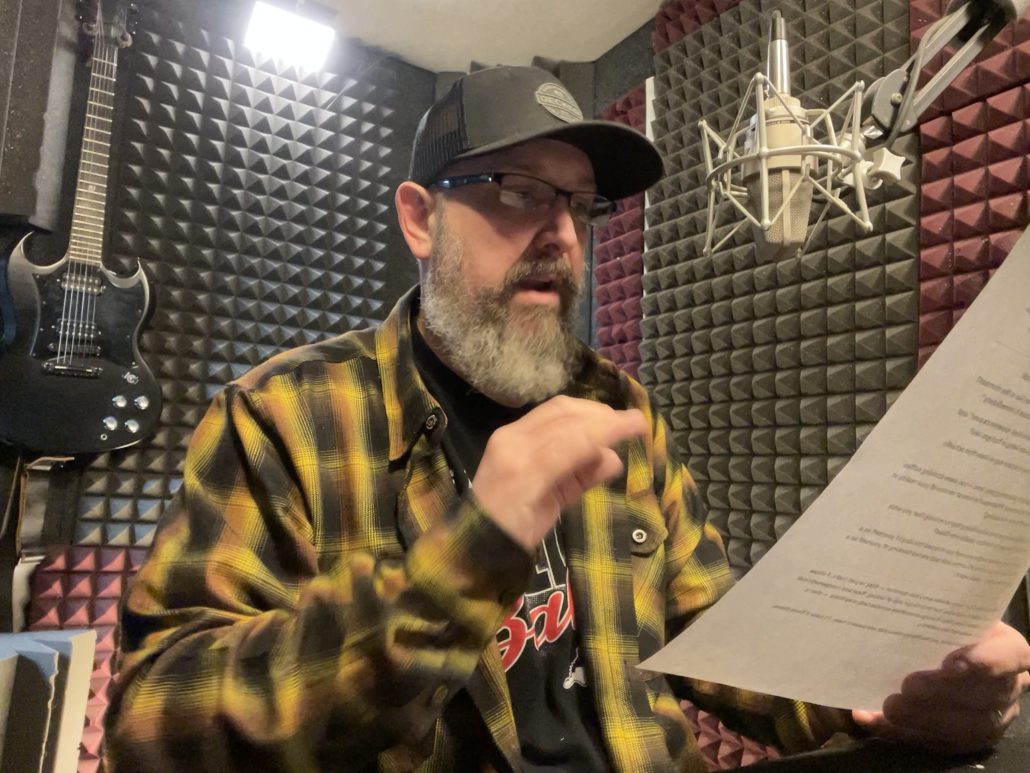
My radio to voice over career path started in 1995, watching a producer named Jay do something I’d never seen before.
He’d stay late after his shift – writing copy, building music beds from scratch, pushing sound effects off carts – all while the reel-to-reel ran. No safety net. No second take without having to start over. Just this running orchestration of timing and instinct that honestly looked like a kind of magic.
My first actual radio spot was for Kelly’s Mexican Restaurant in Sterling, Illinois. Jay was playing characters, directing me, and I couldn’t hit it. I kept missing whatever he was pulling for. He kept at it, eventually got the performance out of me he was after.
I didn’t know that was voice over. I thought it was just radio.
Thirty years later, I understand exactly what was happening in that booth – and why those early days gave me things most voice over training can’t touch. I also understand what radio almost cost me when I tried to make the pivot.
What Live Radio Actually Teaches You
There’s a technique in broadcast called eye-to-brain-to-mouth. The idea is simple: you train your eyes to read ahead of the words coming out of your mouth. Your brain processes what’s coming before your mouth gets there. The result is a read that sounds natural – because you’ve already understood it before you said it.
Live radio drills this in or it ends your career. When you’re on the air at 8:15am with 40,000 people listening, there’s no punch-in. You develop the skill or you don’t make it.
Radio also builds an inner clock that’s hard to explain unless you have it. After enough years behind a live mic, you can feel when you’re over or under 30 seconds. I can look at a script, scan the word count, and know the pace I need before I’ve read a single line. That’s not intuition. It’s something broadcast wires into you over thousands of hours.
And producing spots – being on the other side of the console, directing talent – teaches you something most voice over training skips: think about the end game. Not just what comes out of the speakers when the session’s done. What does the potential customer actually hear? When you’ve sat in the producer’s chair, you stop just performing and start thinking about outcome. You understand that one clean take in 28 seconds isn’t just impressive – it’s a professional courtesy.
The Thing Radio Almost Ruined
Here’s the part nobody tells you when you’re thinking about making the radio-to-voice-over move: your background puts you 100% behind the 8 ball.
That’s the honest answer, and I’m going to say it plainly because I’ve watched a lot of talented radio people struggle with exactly this.
Decades of live broadcast wire a performance into you. The timbre. The push. The presence. And when a regular voice over client hires you, that’s exactly what they don’t want. They want a real person talking to them – not someone performing at them. They want an actual real soul behind you. And when you’re pushing and performing, it’s really hard to connect with that.
The local radio guy got hired for local spots because the client wanted that on-air sound – that familiarity. Off the air, working with clients who don’t know your morning show, that association disappears. What’s left is someone who sounds like they’re trying too hard.
It’s really hard to be normal when you’re in radio. That’s not a knock. It’s just true. You’ve spent years making your voice fill a room. Dialing it back to actual human sounds like giving up. It isn’t. It’s the hardest skill to learn.
Same Person, Different Clothes
A program director I worked with early in my career told me his on-air character was exhausting. He’d built a persona he had to step into every shift, and it wore him out.
I never understood that approach. My take on the whole “finding the character” question coaches spend a lot of time on: you’re the same person you are at a kegger in a cornfield as when you go to a formal wedding in a black tie. Same person, different clothes. You don’t disappear – you dial certain things up or down depending on who’s in the room and what they need from you.
Finding the character isn’t about becoming someone else. It’s about knowing who you’re talking to, understanding what room you’re in, and figuring out how they can relate to you. Not a version of you. You.
That’s the work. And a good coach can walk you through it. But the first step is understanding that the habits radio built aren’t wrong – they’re just pointed in the wrong direction. Once you stop performing and start connecting, the 30 years behind a mic start working for you instead of against you.
If you want to hear what that sounds like when it clicks, the demos are here.
The technical foundation radio builds is real. The sight reading, the timing, the producer’s-eye view of a session – that’s not nothing. But none of it lands until you learn to get out of your own way.
When the read sounds effortless, nobody knows how much work went into it. That’s the whole point. Let’s talk.