One client had their e-learning scripts organized so well I still think about it. One enormous project, multiple voice talents attacking it at the same time, and every piece organized so well it all slotted together. I’d never seen anything so well organized, before or since.
I honestly don’t remember what that particular module was about anymore. That’s how voice over for e-learning courses goes. Sometimes it’s teaching people a new app. Sometimes it’s a new way to do work at their place of business. What stuck with me wasn’t the subject matter, it was how the project was built, and one small, unglamorous habit I use to get through every one of these reads without losing my place.
What Makes Voice Over for E-Learning Courses Different From a Commercial
A commercial spot asks for 30 seconds of somebody’s attention. Voice over for e-learning courses asks for 15 to 30 minutes, sometimes longer, and the subject matter itself is often the most boring thing on earth. You have to watch the way you inflect and keep it interesting the whole way through, because the second the read goes flat, the person on the other end checks out. That’s not a guess on my part. Training Industry makes the same point about corporate training: voice narration helps hold attention and reinforce ideas, and it can turn dull, repetitive material into something clear and compelling.
That’s the actual craft difference. A commercial has to land once. An e-learning module has to hold up for half an hour without ever sounding like it’s reading itself.
The Dog Clicker Trick
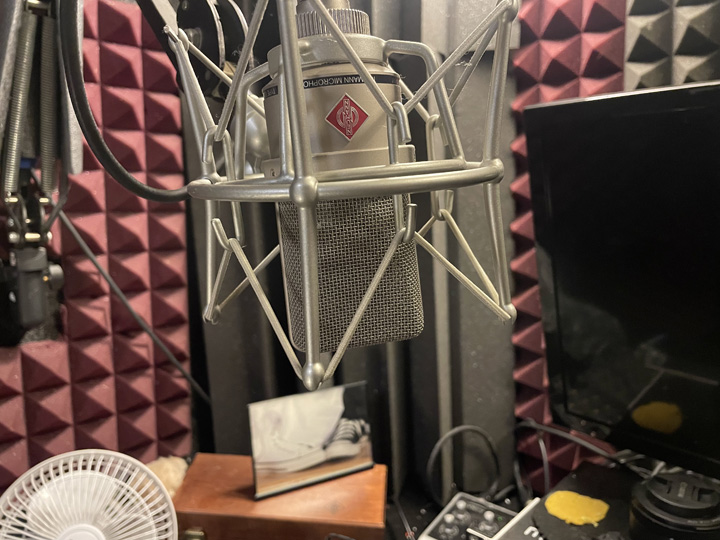
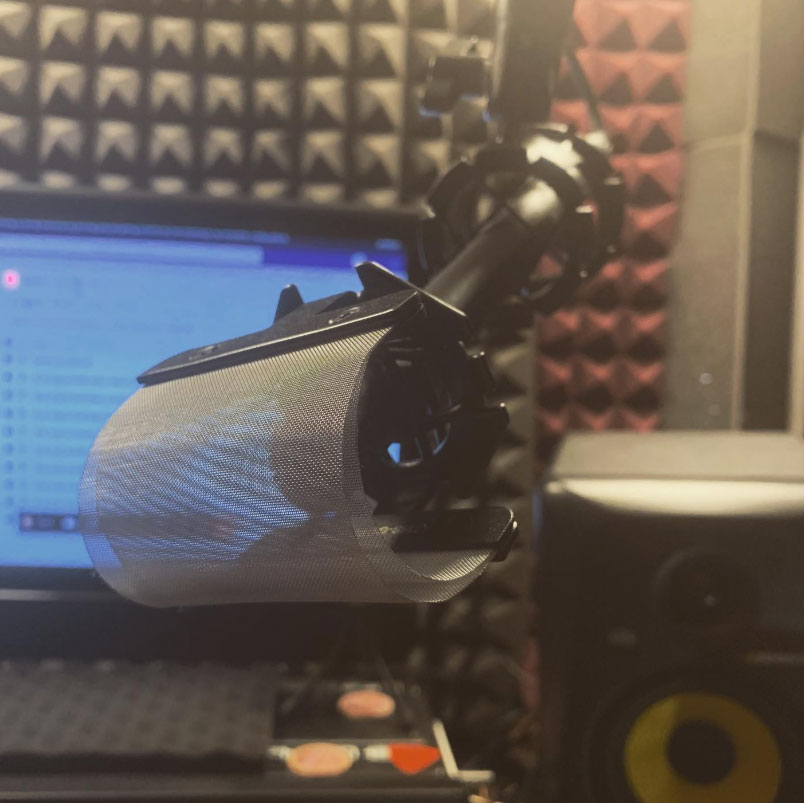
Here’s the part almost nobody outside the industry ever thinks to ask about: editing. Some voice talent punches in and fixes a flub live, right there in the take. I don’t. I keep a dog clicker next to the mic, and the second I flub a line, I click it, keep reading, and clean the mistake up later in post.
That one habit is the whole reason I can stay in the story for 20 or 30 minutes straight instead of stopping every time I trip over a word. Breaking to fix something live kills the flow, and flow is the entire thing that keeps a long module from sounding like it’s being read off a page. The clicker lets the mistake pass without breaking the performance. I fix it after, when fixing it doesn’t cost me the read.
What kills a long read is stopping. These people are sitting there listening to you for 15 to 30 minutes, not 30 seconds, so you have to watch the way you inflect and keep it interesting. The last thing you want is for the person on the other end to be bored out of their mind. Every punch-in is a little reset, and on a 30-minute module those resets add up to a read that sounds stitched together. Good voice over for e-learning courses shouldn’t sound stitched together. It should sound like one person walking you through something they understand.
What a Multi-Talent E-Learning Project Actually Needs From the Read
On that well-organized project, I wasn’t told to sound like the other voices on it. Nobody handed me a style guide to match tone or pacing talent to talent. The only real instruction was to sound professional and stay connected to the story I was reading. Past that, I read it my own way.
If you’re the one hiring for a project like that, that’s the thing worth knowing going in. A big e-learning build with multiple voice talents doesn’t need everyone sounding identical. It needs everyone sounding like they actually believe the material, which is a different, harder bar than matching a house style. The organization has to be airtight on the production side, scripts, modules, file naming, all of it, but the reads themselves can breathe.
Why Repeat Clients Are the Only Proof That Matters
I don’t have a stack of completion-rate reports to hand you. What I have is repeat business, and repeat business is how I get most of my work. A client doesn’t come back for a second, third, or tenth module unless the first one actually did its job. That’s the only scoreboard voice over for e-learning courses has ever given me, and honestly, it’s the one I trust most.
If you’ve got a training module that needs to hold somebody’s attention for half an hour instead of losing them at minute six, that’s the read I bring. Not a performance that announces itself, just somebody who stays in the story long enough to get you to the end. Take a look at what that actually sounds like before you book your next module.
Bill Stage records commercial, corporate, and narration voice over from a Whisper Room booth in rural Illinois. Read more about how he works.