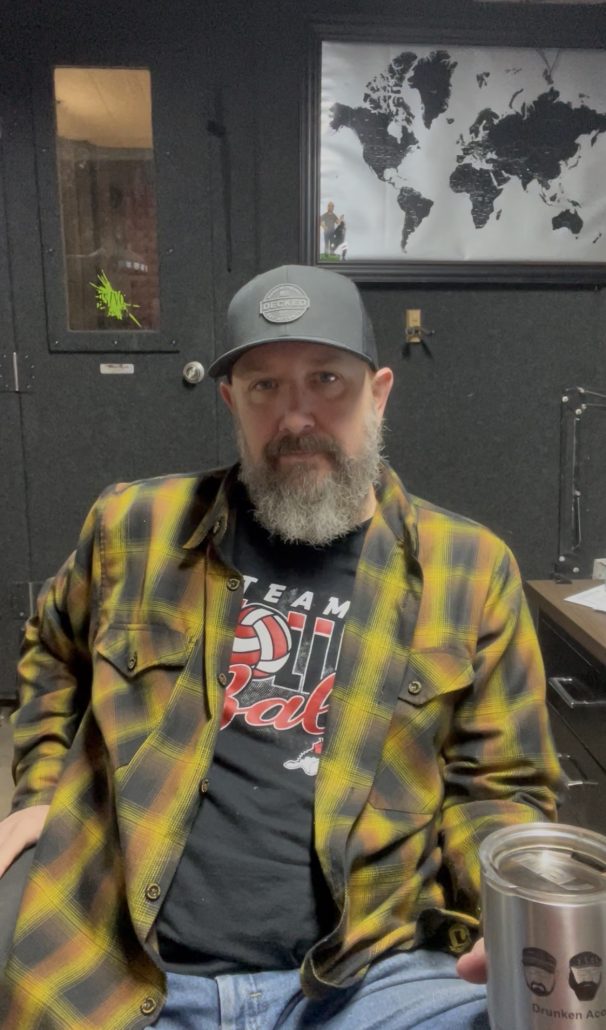
This whisper room review comes from someone who has been recording in one almost every day since the Obama administration. I found mine on Craigslist.
A full Whisper Room vocal isolation booth, near Nashville, listed for $1,000. I had been searching using a Google hack that pulls local Craigslist listings across a wide radius. It took some patience. When this one showed up, I sent my buddy Matt down first to check it out before I committed.
Matt said it looked good. So I rented a U-Haul, drove down to Tennessee, loaded up a vocal booth, had what I can only describe as an outstanding weekend that took a day and a half to recover from, and drove the whole thing back to Illinois.
That was years ago. I am still recording in it.
This whisper room review is not from someone who tested one for a YouTube video or researched specs for an article. It is from someone who has been inside one almost every day since the Obama administration.
What a Whisper Room Actually Is (And What One Costs New)
If you are not familiar with the brand, Whisper Room makes prefabricated vocal isolation booths used in professional studios, broadcast facilities, and home recording setups. They are not soundproof in the full acoustic engineering sense. They are isolation booths, meaning they significantly reduce outside noise bleed in both directions. Good enough for voice over and broadcast work. Not designed for full band tracking.
New, a Whisper Room runs from roughly $4,000 on the low end to well over $10,000 depending on size and configuration. (https://whisperroom.com) The larger the booth and the higher the STC rating, the more it costs.
This is why they show up on Craigslist. Radio stations, recording studios, and corporate facilities buy them, use them for years, and eventually downsize, relocate, or close. When that happens, a $7,000 booth becomes a $1,000 Craigslist listing and a logistical puzzle.
The logistical puzzle is the part most review articles skip.
The Part This Whisper Room Review Has to Say About Moving One
Whisper Rooms are modular. The walls panel together, the roof lifts off, and in theory the whole thing breaks down and reassembles without issue.
In practice, you want at least two people and a whole day. The panels are heavier than they look. The gaskets that seal the panels together need to be seated correctly or you lose isolation and end up with air gaps. When Matt and I reassembled mine in my basement, we had to take the roof panels off twice because the door was not hanging right. We got it squared away, but it took time and some patience.
If you are buying a used unit, inspect the panel edges and gaskets before you commit. Compressed or degraded gaskets will let sound through and they are a pain to replace. Ask when the unit was last assembled. A Whisper Room that has been sitting disassembled in a warehouse for five years is a different situation than one that was actively in use six months ago.
What I Actually Hear Inside It
Quiet. Real quiet, with the door sealed.
Not dead. There is still some natural presence to the space, which is a good thing. A booth that is too acoustically dead can sound unnatural, especially for conversational voice over work where you want a little room feel underneath the read.
What you do not hear, with the door closed: my HVAC system, the barn outside, the dog, traffic. Voices from upstairs are reduced to the point where they would not appear on a recording. That level of isolation is what makes recording at home with professional-quality audio possible.
The sound inside the booth is still a function of how you treat the inside surfaces. A bare Whisper Room records with some low-frequency buildup that you will notice on playback. I added bass traps in the corners and acoustic panels on the walls. That treatment changed the sound of the booth more than any other single thing I have done to it. Do not skip the inside treatment and expect the booth alone to solve everything.
What Nobody Mentions: The Heat
Whisper Rooms have minimal ventilation by design. The door seals tight to reduce noise bleed, which also means the air inside gets warm when you are in there working.
In winter, it is not an issue. In July in Illinois, you are going to be aware of it within about 20 minutes. I installed a small fan system that moves air without introducing noise. If you are buying a used unit, ask what they did for ventilation or plan to figure out your own solution.
This is not a dealbreaker. It is just the thing nobody bothers to mention in a whisper room review because most people writing them are describing a booth they used once, not one they have been recording in through multiple Illinois summers.
Is a Whisper Room Worth It?
For voice over work? Yes. Without question.
For full instrument recording? No. The isolation is built for voice-level SPL. You will saturate it quickly with a drum kit or even a loud guitar amp. Whisper Room is upfront about this. They are vocal and broadcast booths, not live tracking rooms.
For home VO studios specifically, the combination of isolation, modular assembly, and long-term durability makes them about as close to a purpose-built solution as you are going to find. The STC ratings hold up. The construction is solid. Mine has survived multiple moves within the house, one reassembly, and years of daily use without any structural issues.
The new pricing puts them out of reach for a lot of people starting out, which is why Craigslist is worth the search and the patience. Set up a search, check it weekly, and be ready to move when something comes up. They sell fast.
What My Setup Actually Looks Like Right Now
A Whisper Room in my basement. Neumann TLM 103 on a wall mount. Sennheiser shotgun mic on a second wall mount. Bass traps in all four corners, acoustic panels on the back wall. Small fan system for ventilation. Focusrite interface. Laptop outside the booth.
I have recorded commercial spots, corporate narration, e-learning modules, and radio imaging out of this thing. The audio holds up against work coming out of professional studios. That is the whole point.
I spent $1,000 on the booth and several more years worth of small purchases on what is inside it. Total investment is probably in the range of $3,000 to $4,000 over time. Everything except the Neumann was bought used.
It is not a beautiful room. It sounds great.
Curious what the room actually sounds like on a finished recording? The demos are on the demos page.